News · 5 October 2020
The UPV makes progress in the GUARDIAN project to analyse the area’s capacity to adapt to climate change
The UPV’s ReForeST group is monitoring the soil–plant–atmosphere continuum in La Vallesa to define optimal irrigation patterns against forest fires.
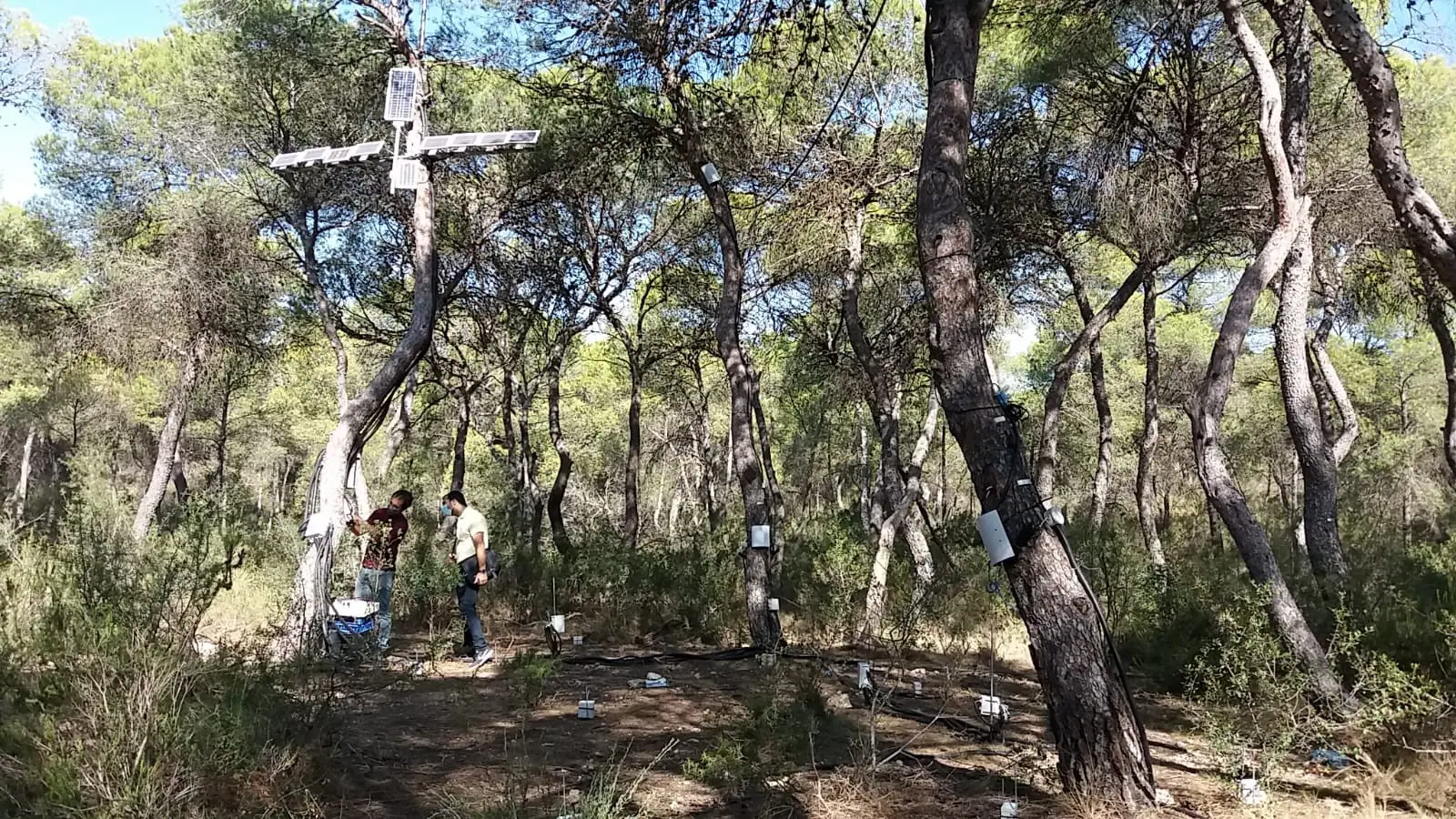
The Universidad Politécnica de Valencia is one of the partners in the GUARDIAN project, which, together with the town councils of Paterna and Riba-roja de Túria, Hidraqua, Medi XXI and CETAQUA, has been working in recent years to increase fire resilience in a wildland-urban interface area of the Parque Natural del Túria and La Vallesa. This initiative is funded by the European Union through the Urban Innovative Actions call for innovative initiatives to mitigate the effects of climate change and, in this particular case, forest fires.
The partner organisations have been making progress in developing the project. This week, the Universidad Politécnica de Valencia met the other partners to present first-hand the work it has carried out to analyse the capacity of these forests to adapt to climate change.
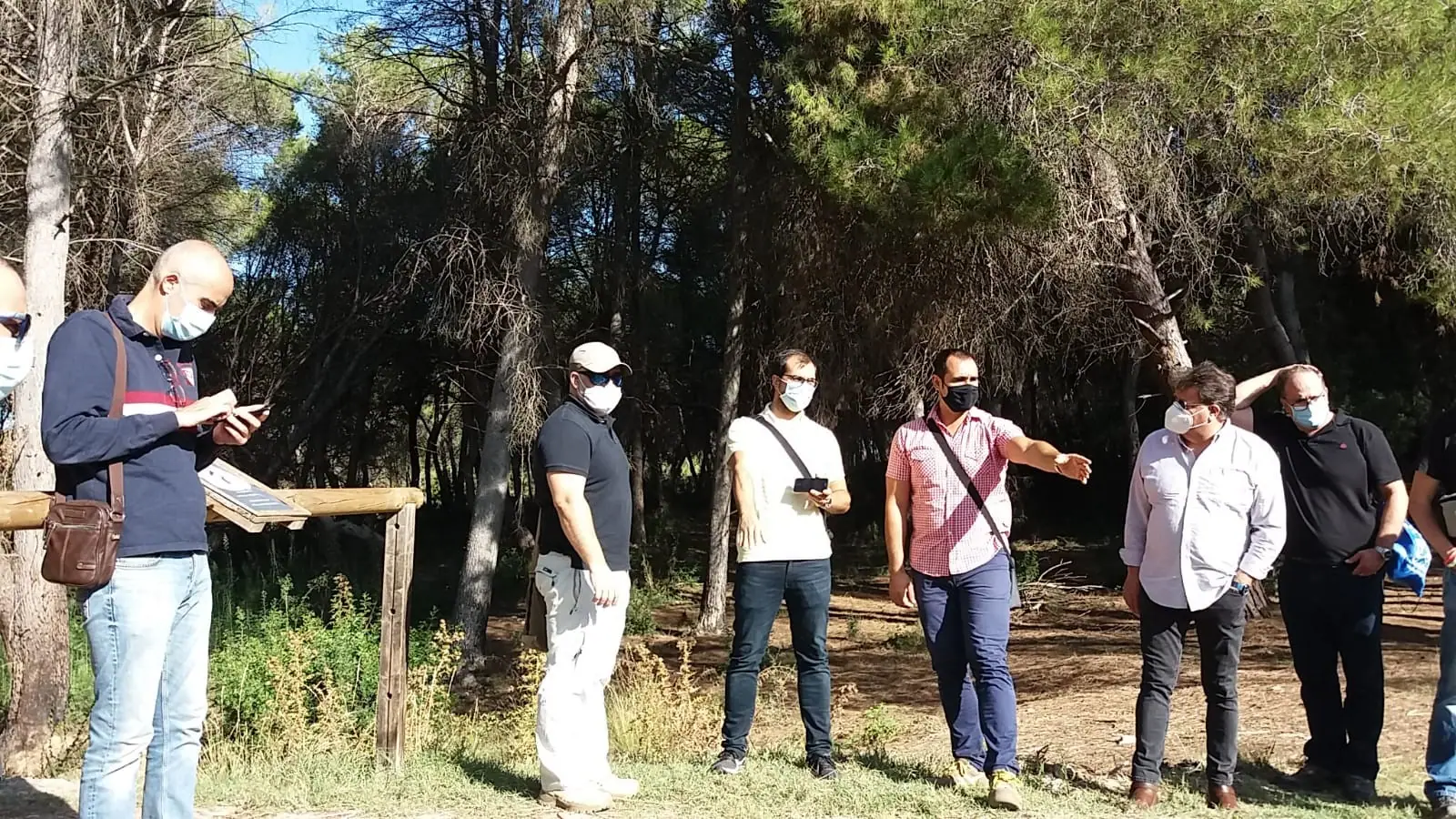
The UPV’s contribution to the GUARDIAN project is made through the technical team of the ReForeST research group, led by Dr Antonio del Campo, and focuses on analysing the characteristics of the soil substrate according to atmospheric conditions and the consequences for the water status of the vegetation. During the summer of 2020, the University installed sensors in the soil and in trees in selected areas of La Vallesa to quantify changes in the structure and functions of the forest ecosystems. This installation makes it possible to monitor the soil–plant–atmosphere continuum with great precision. Data are collected at high temporal frequency throughout the day and on a continuous basis, generating time series of variables such as plant and soil water potentials, stomatal conductance, the water content of the soil, trunk, crown and fine fuels, and sap flow. These data will deepen our understanding of how changes in precipitation and temperature translate into changes in the substrate and in the functions and structure of the vegetation. Ultimately, water stress in forest stands leads to greater flammability and fire risk.
These relationships, analysed during the summer periods and throughout the year, will make it possible to determine optimal irrigation patterns. Irrigating the forest stands in the wildland-urban interface next to the residential estates surrounding La Vallesa is part of GUARDIAN’s land management strategy. To this end, irrigation trials have begun to compare how the monitored trees react to water stress and its mitigation, dividing the sample into irrigated trees and non-irrigated control trees. This experimental design bears a certain analogy with work in precision agriculture, transferred to the forestry field – a little-studied area – to encourage the efficient use of scarce water resources, which are increasingly depleted in Mediterranean regions, while helping the vegetation to cope with the negative effects of persistent droughts, creating clear synergies with forest fire prevention and defence strategies.
The innovative experimental design already in operation in La Vallesa will provide a solid scientific basis for defining automated irrigation patterns that will be activated under risk conditions, both preventively and as a defence in the event of a fire.
A replicable solution
GUARDIAN shows that reclaimed water can protect the wildland-urban interface. Let us know if you would like to apply it in your municipality.