News · 1 August 2022
The UV Water Economics Group develops an innovative methodology within the Guardian project to quantify the cost of not acting on fire prevention in the Parc Natural del Túria
A UV Water Economics Group study estimates that failing to act on fire prevention in the Parc Natural del Túria would have cost close to 31 million euros.
The team of researchers, with extensive experience in national and international projects particularly related to the circular economy in the water sector, has studied the areas of Masía de Traver, Valencia la Vella, the Els Pous residential estate and the south-west of the La Cañada residential estate
The Water Economics Group of the Universitat de València (GEA-UV), led by Professor Francesc Hernández, has developed an innovative methodology that quantifies the cost that postponing or not taking fire prevention measures would have entailed in the areas of the Parc Natural del Túria recently protected by the Guardian hydraulic fire-protection infrastructure – a figure, the cost of inaction, that would come to almost 31 million euros.
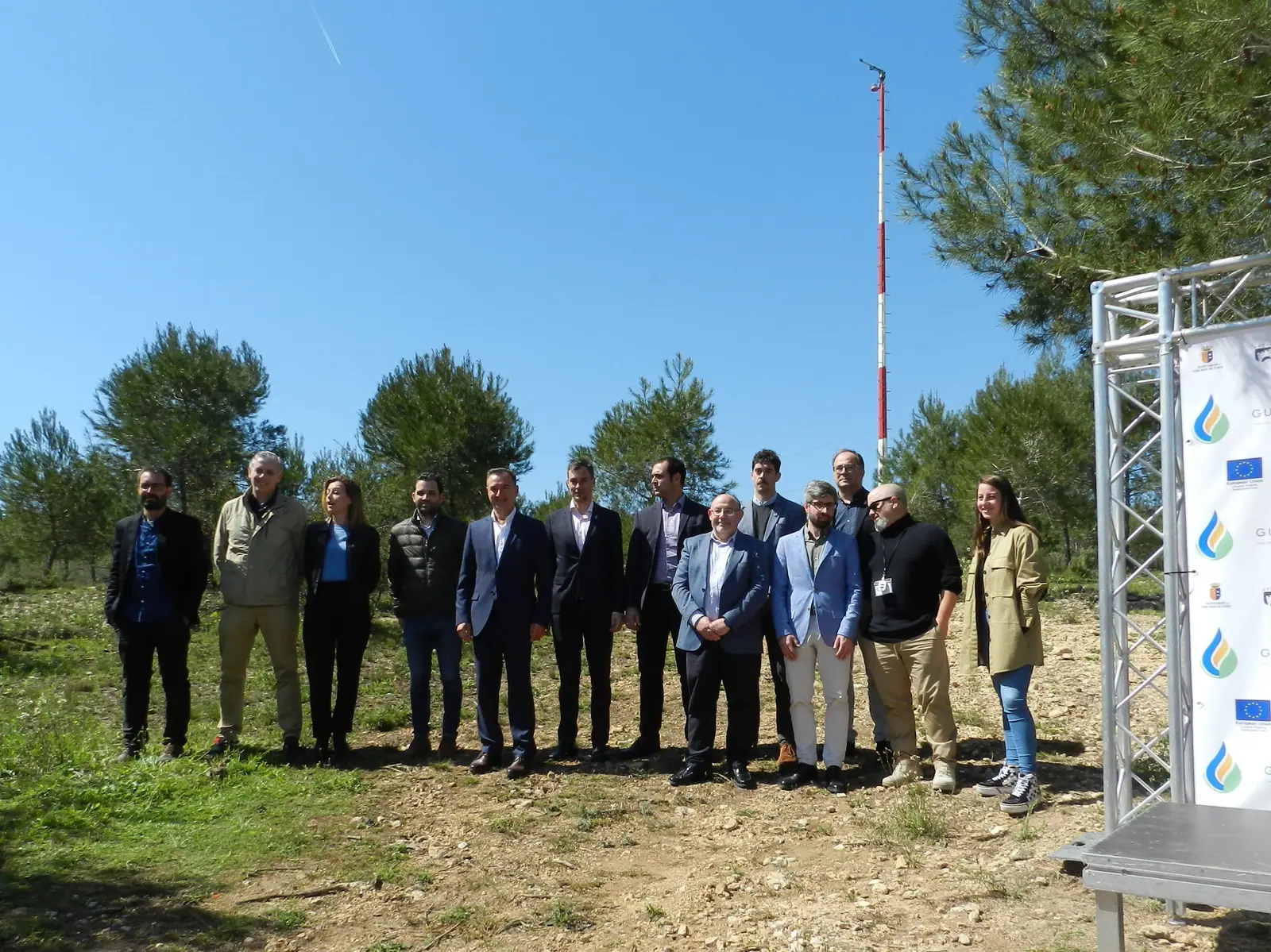
This is one of the conclusions of the study – novel both for its methodology and for quantifying the concept of inaction in fire prevention – carried out by the team of Valencian experts who form part of the European Guardian project. The study highlights the need for environmental awareness and for being proactive, and confirms that taking no action either on fire prevention or on the circular economy of water through its regeneration carries high environmental risks, as well as a deterioration in social well-being and high economic costs.
The Guardian prevention infrastructure is the largest in Europe and the second largest in the world to use reclaimed water from a treatment plant, and it protects a total of 35 hectares and around 15,000 inhabitants in various parts of the wildland-urban interface of the Parc Natural del Túria located in Riba-roja de Túria and Paterna from possible forest fires.
Indeed, the use of reclaimed water to fight forest fires is one of the distinguishing features of Guardian, which is committed to the circular economy and sustainability, and whose 40 water cannons help prevent possible fires by wetting the strips of trees that act as a natural barrier between the forest and the residential estates.
This amount, close to 31 million euros, is the overall result of the quantification carried out by GEA-UV of the environmental and material consequences that a fire would have in the areas of the Parc Natural del Túria studied had the current Guardian prevention system not been installed. The simulation took into account aspects such as the equipment and personnel needed to extinguish it, the forest area affected, the CO2 emissions generated and the costs associated with damage to homes in the affected residential areas.
Likewise, in contrast to the environmental and economic consequences that a forest fire would have in the areas of the Parc Natural del Túria analysed if no prevention systems were used, the researchers have demonstrated the return on investment of the Guardian fire-protection system, which was 80% funded by European funds and whose total cost amounted to around 5,400,000 euros.
According to Francesc Hernández, Professor of Water Economics at the UV, in the current context of a widespread rise in the global average temperature and increasingly frequent and severe fires, “it is essential to replace corrective public policies with preventive policies of environmental awareness, whose application in the case of the Guardian project’s fire-protection infrastructure amply demonstrates their viability and cost-effectiveness”. He added that “within the framework of the circular economy, replacing mains water with reclaimed water increases the overall value of this European project, because it guarantees the long-term sustainability of the system”.
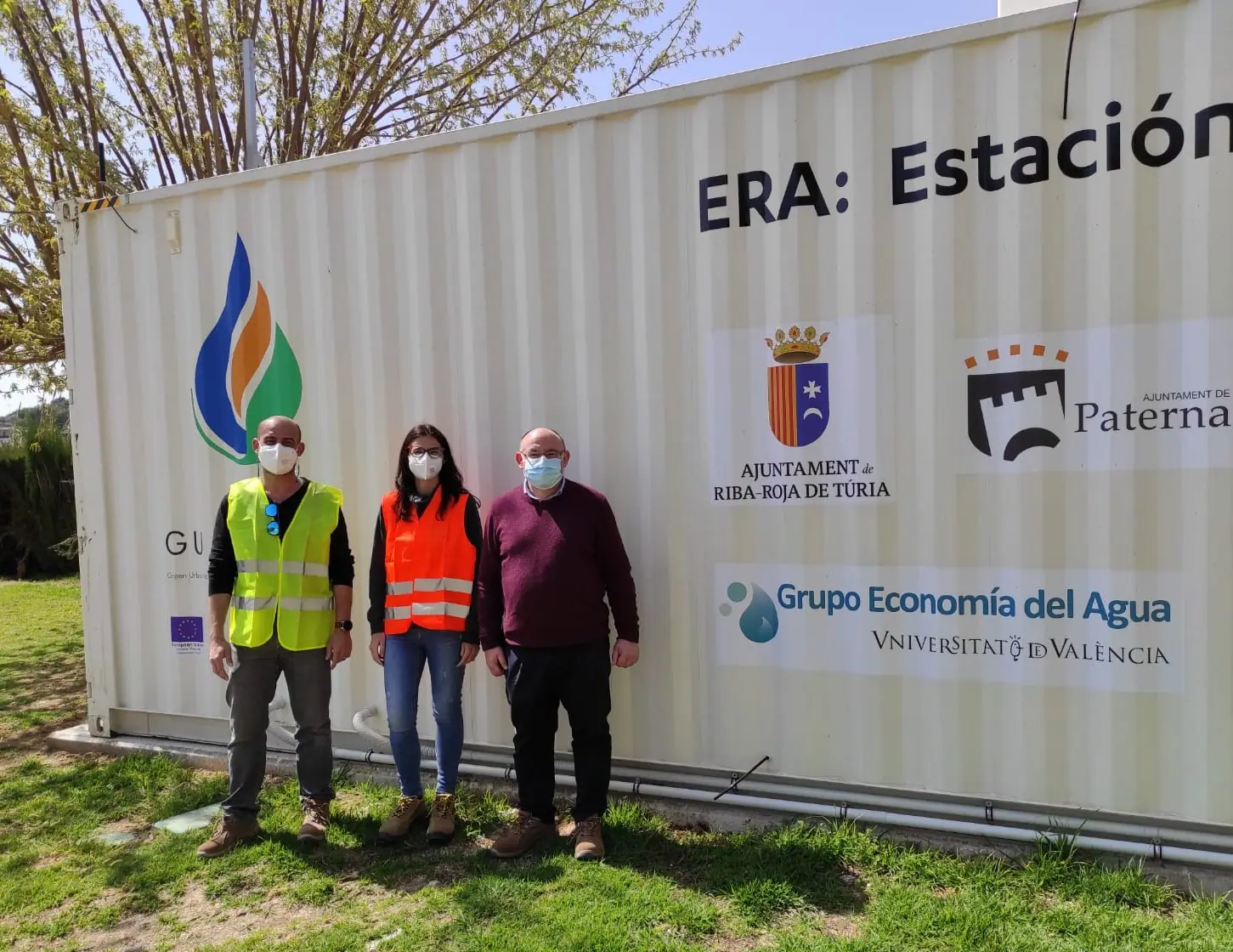
Lledó Castellet, a researcher with a PhD in Water Economics at the UV, explained that the Guardian system “reduces the material and financial resources devoted to extinction, as well as compensation payments or the work of restoring the burnt natural environment”, while at the same time “protecting a natural environment of great ecological and landscape richness, the Mediterranean forest, which is threatened by the lack of available water resources”.
Vicent Hernández, a researcher with a PhD in Water Economics at the UV, stressed that, in the case of forest fires, “repairing the damage is extremely costly and, in many cases, not possible”, and that the Guardian prevention system “is easily replicable in other areas because the value of the ecosystem services provided by natural sites and forest areas is far higher than the cost of preventing fires”.
Advantages of Guardian for firefighting teams
Implementing the Guardian solution allows firefighting teams to concentrate their efforts on the areas furthest from the wildland-urban interface, reducing control and extinction times and minimising the area affected in the event of a fire. In addition, using reclaimed water for prescribed irrigation through the installed hydraulic infrastructure reduces pressure on a scarce resource such as water. Likewise, within the framework of the circular economy, replacing mains water with reclaimed water increases the value of this prevention system.
It is also worth remembering that in the forest of La Vallesa alone, which is part of the Parc Natural del Túria, a total of 150 forest fires occurred between 1990 and 2022, destroying 514 hectares of the natural park within the municipal areas of Riba-roja de Túria, Paterna, Manises, l’Eliana and San Antonio de Benagéber.
The Guardian partners
The European Guardian project, coordinated by Riba-roja de Túria Town Council, is made up of Paterna Town Council, the Water Economics Group of the Universitat de València, Hidraqua, Medi XXI, the Universitat Politècnica de València and Cetaqua. It has also had the collaboration of the Parque Natural del Turia (Generalitat Valenciana).
The UV Water Economics Group
The Water Economics Group of the Universitat de València has spent more than 15 years on research and on developing projects in the circular economy, particularly in the water sector.
The Water Economics Group is headed by Francesc Hernández, who leads the Chair in Transforming the Economic Model: Circular Economy in the Water Sector, run by the UV and the Generalitat Valenciana.
The Group is made up of a multidisciplinary team of postdoctoral researchers with extensive experience in designing tools to support water resource management and in implementing economically and environmentally viable projects in the field of the circular economy. The group of specialists has also developed an innovative methodology for risk analysis and for quantifying the costs of not acting in the field of water reuse and the improvement of water infrastructure.
A replicable solution
GUARDIAN shows that reclaimed water can protect the wildland-urban interface. Let us know if you would like to apply it in your municipality.