News · 16 June 2021
Carolina Pascual highlights innovation as one of the key drivers for improving quality of life
Regional minister Carolina Pascual visited Riba-roja de Túria and Paterna to see first-hand the progress of GUARDIAN, from the ERA to the forest sensors.
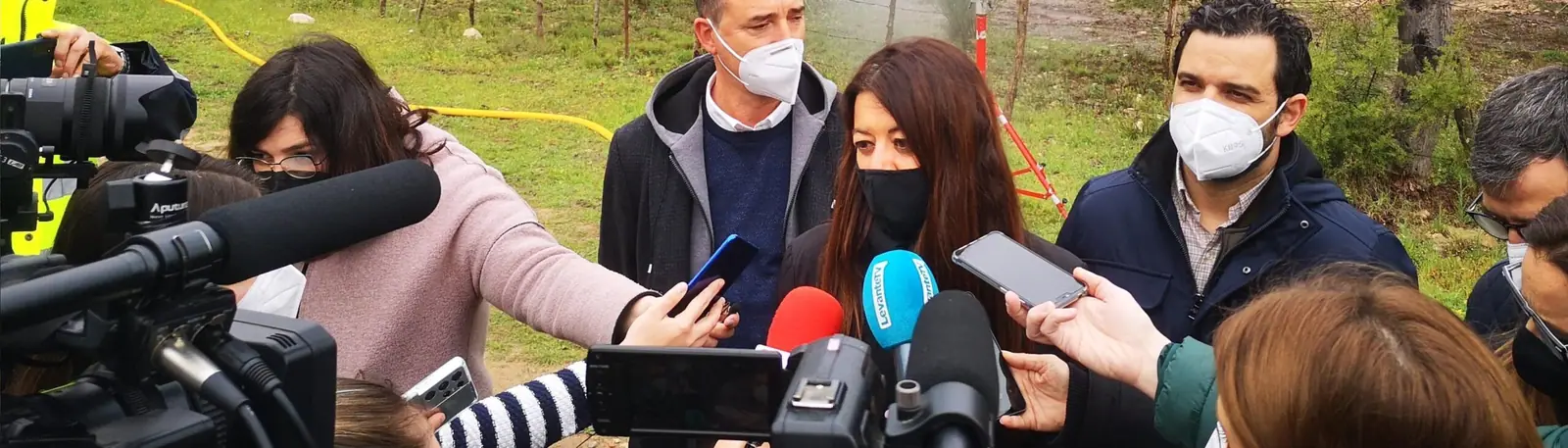
- She visits the towns of Riba-roja de Túria and Paterna to see first-hand the progress of the GUARDIAN project, ‘Green Urban Actions for Resilient fire Defence of the Interface Area’
The Valencian regional minister for Innovation, Universities, Science and Digital Society, Carolina Pascual, has stressed that “innovation is one of the key drivers for improving people’s quality of life”, and has called for it to be applied in all sectors “as a response to problems that we had previously been unable to solve”.
Pascual visited the towns of Riba-roja de Túria and Paterna to see first-hand the progress of the GUARDIAN project, ‘Green Urban Actions for Resilient fire Defence of the Interface Area’.
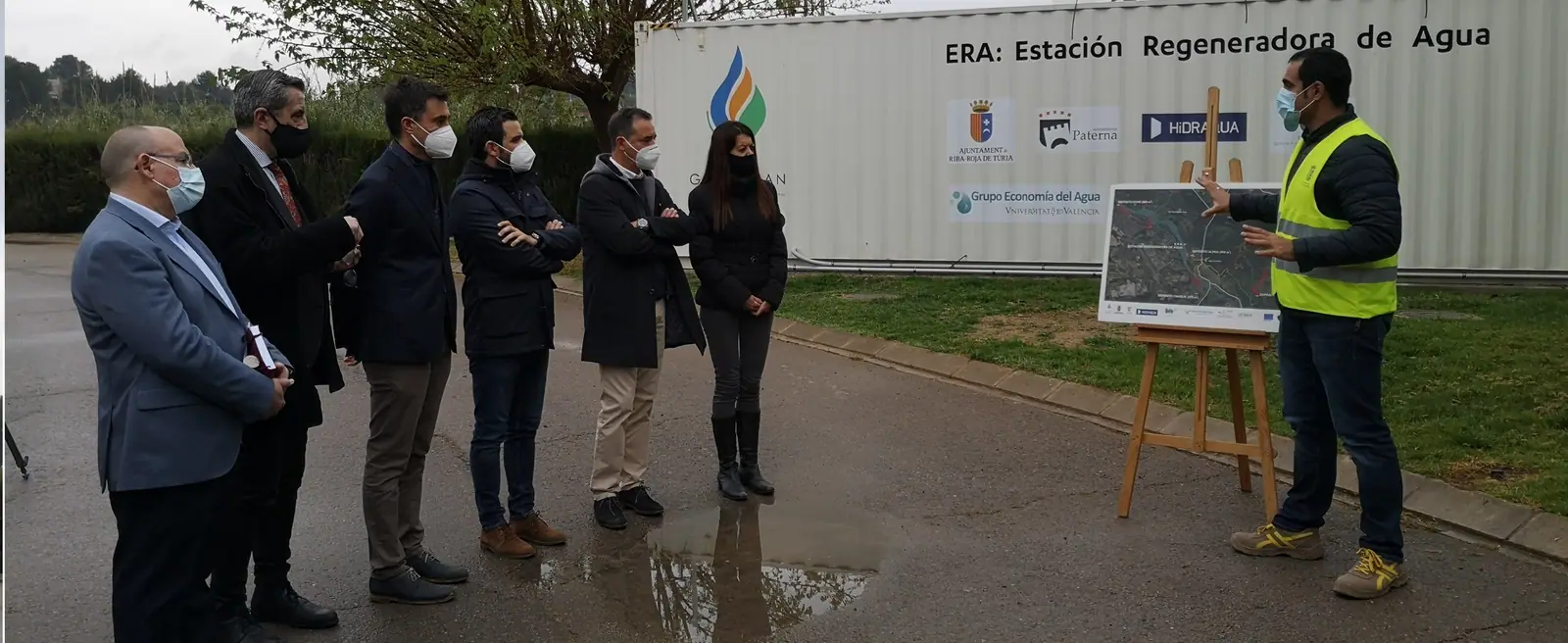
During the tour of the project’s various facilities, the minister remarked that “the cross-cutting nature of innovation means it can be applied successfully in many fields, such as the environment, preventing fires or improving water quality”.
It is worth noting that GUARDIAN is a project designed to increase fire resilience in an area of the Parc Natural del Túria – specifically, the wildland-urban interface areas of the residential estates of Els Pous, Valencia La Vella, Masia de Traver and la Canyada.
This initiative is funded by the European Union and led by Riba-roja de Túria Town Council, Paterna Town Council, Hidraqua, Medi XXI, the Universidad de Valencia, the Universidad Politécnica de Valencia and Cetaqua. The Parc Natural del Túria (Generalitat Valenciana) is also collaborating on the project.
The actions under way include the design and construction of a water regeneration plant (ERA) to remove emerging micropollutants, which will treat part of the effluent from the Camp de Túria II wastewater treatment plant (EDAR).
The visit began with a tour of this plant, where the minister, Carolina Pascual, saw how it works. On this point, she noted that “in the face of the challenges we are confronting, innovative responses give us results we would never have imagined before, solving both problems that may arise by chance and those resulting from human action”.
In this regard, she thanked “all the companies that are committed to innovation, because the impact it generates has a multiplier effect: it tackles the problems we need to solve, improves the quality of our jobs and contributes to a change of model that makes us more efficient and competitive”.
The companies Hidraqua and CETAQUA were responsible for the design, production and installation of this facility, an infrastructure that carries out advanced water treatment to remove micropollutants and obtain water of sufficient quality for use in the green firebreaks. In addition, part of the reclaimed water will be supplied to La Vallesa reservoir, also located in this Natural Park, to improve the quality of this listed wetland.
The delegation then went on to the Alpha tank, which forms part of this infrastructure, has a capacity of 500 m³ and is practically complete.
The visit ended at the la Canyada residential estate, where a technical team from the ReForeST research group of the Universitat Politècnica de València carried out a simulation of the monitoring performed by sensors installed in the forest.
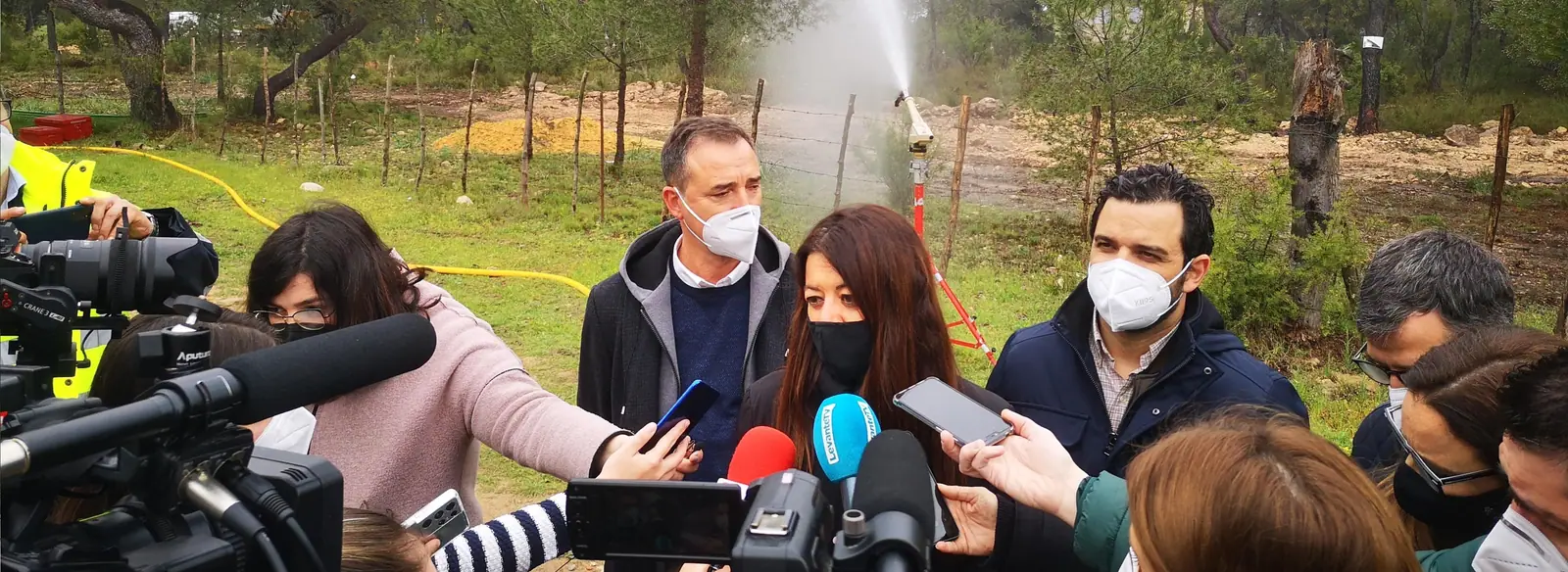
These sensors are used to quantify changes in the structure and functions of forest ecosystems and provide insight into how changes in precipitation and temperature translate into changes in the substrate and in the functions and structure of the vegetation.
The innovative experimental design, which is already in operation in La Vallesa, will provide a solid scientific basis for defining automated irrigation patterns that will be activated under risk conditions, both preventively and as a defence in the event of a fire.
Finally, Pascual was also shown the forestry work to create the green barriers, where less fire-prone vegetation can be successfully established thanks to prescribed irrigation using 42 fixed towers and more than 15 portable ones, which will supply reclaimed water from the ERA.
A replicable solution
GUARDIAN shows that reclaimed water can protect the wildland-urban interface. Let us know if you would like to apply it in your municipality.