News · 18 January 2021
Progress of the actions in 2020: Europe backs a Valencian project to increase resilience to fires in the Parc Natural del Turia
A review of GUARDIAN’s progress in 2020: the water regeneration plant, the hydraulic network, forestry work and the UPV’s sensor installation.
The construction of a hydraulic system based on reclaimed water cannons for irrigation – the SIDEINFO system – and the execution of green barriers made up of species more resistant to fire is the proposal put forward by the GUARDIAN project.
An innovative project that was presented in the third call of the European Union’s UIA Urban Innovative Actions. It is an initiative that aims to facilitate the implementation of new solutions to the urban challenges we face, and the project competed in it together with 43 other projects from partner countries in the climate change category.
The Guardian project has received a grant of €4.4 million from the European Union’s ERDF (FEDER) funds, aid that represents 80% of the €5.5 million that this project represents for the next three years and whose financing will be completed by the partner entities that participate in its development.
The Riba-roja de Túria City Council, the Paterna City Council, Hidraqua (Suez Group), Medi XXI, University of Valencia, Polytechnic University of Valencia and Cetaqua are the partner entities of the initiative, with the collaboration of the Parc Natural del Túria (Generalitat Valenciana). Each of the partners develops a part of this global project that actively contributes to the fulfilment of the Sustainable Development Goals (SDG) set by the UN. “Partnerships for the Goals”, “Clean water and sanitation”, “Sustainable cities and communities” and “Climate action” are the SDGs to which it contributes most actively through this project.
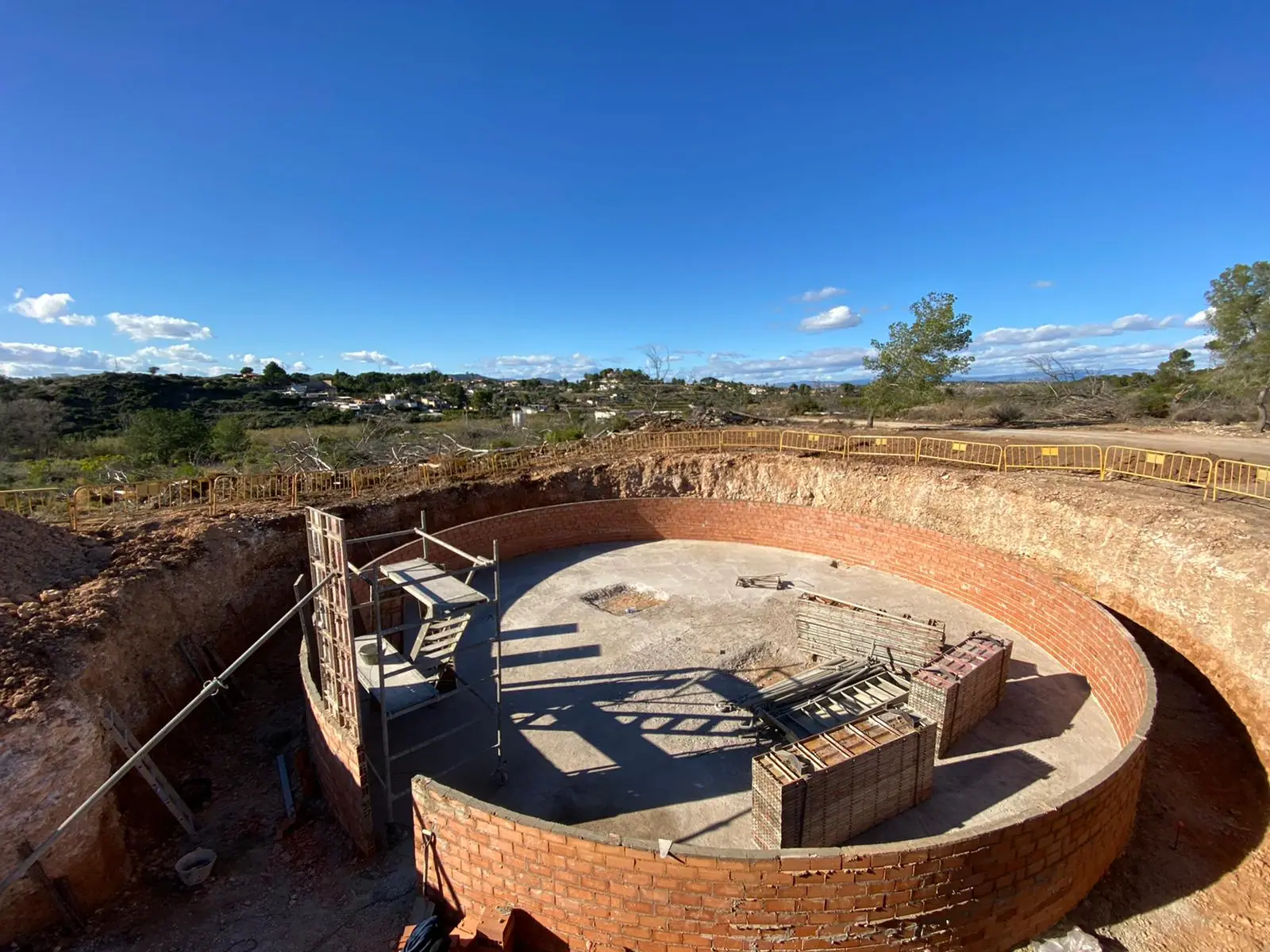
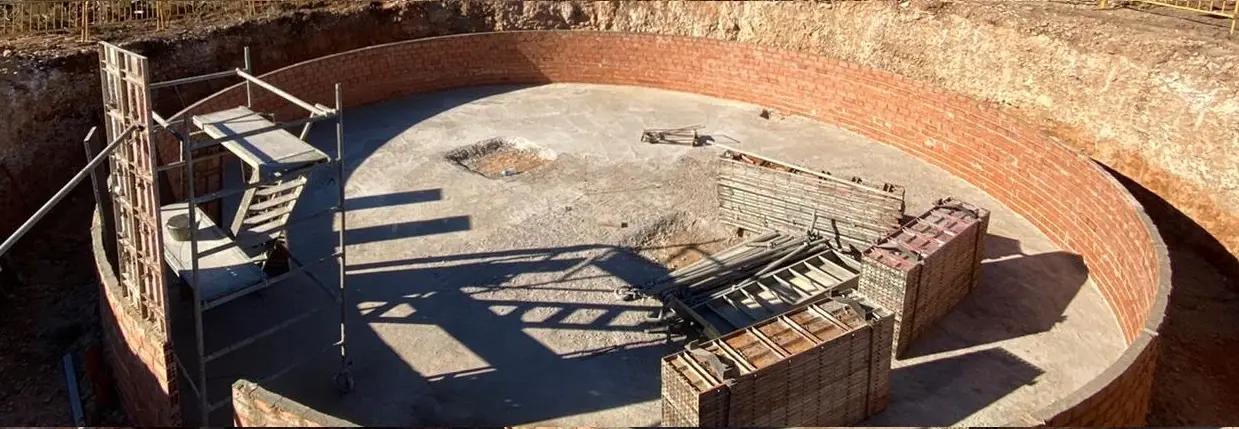
There have already been numerous advances. For example, the work on the hydraulic infrastructure is underway which, through a Water Regeneration Station (ERA), five storage tanks and 6,500 metres of pipes, will allow the water to be carried from the ERA to the points where the 42 water cannons or SIDEINFO towers are installed. The task of these towers is to create green barriers that will act as firebreaks to prevent the advance of fire in the wildland-urban interface area. To do this, prescribed irrigation will be carried out, with preventive irrigation on days of maximum alert, and the system can be activated immediately when a fire risk is detected.
The Hidraqua and CETAQUA companies have been in charge of the design, production and installation of the Water Regeneration Station (ERA), an infrastructure in which an advanced water treatment is carried out to eliminate micropollutants and obtain water of sufficient quality for use in the green firebreaks. In addition, part of the reclaimed water will be supplied to the La Vallesa reservoir, also located in this Natural Park, to improve the quality of this listed wetland. Likewise, Hidraqua is currently making progress in the execution of the reclaimed water storage tanks and transport pipelines. All hydraulic infrastructures are expected to be completed before the summer season.
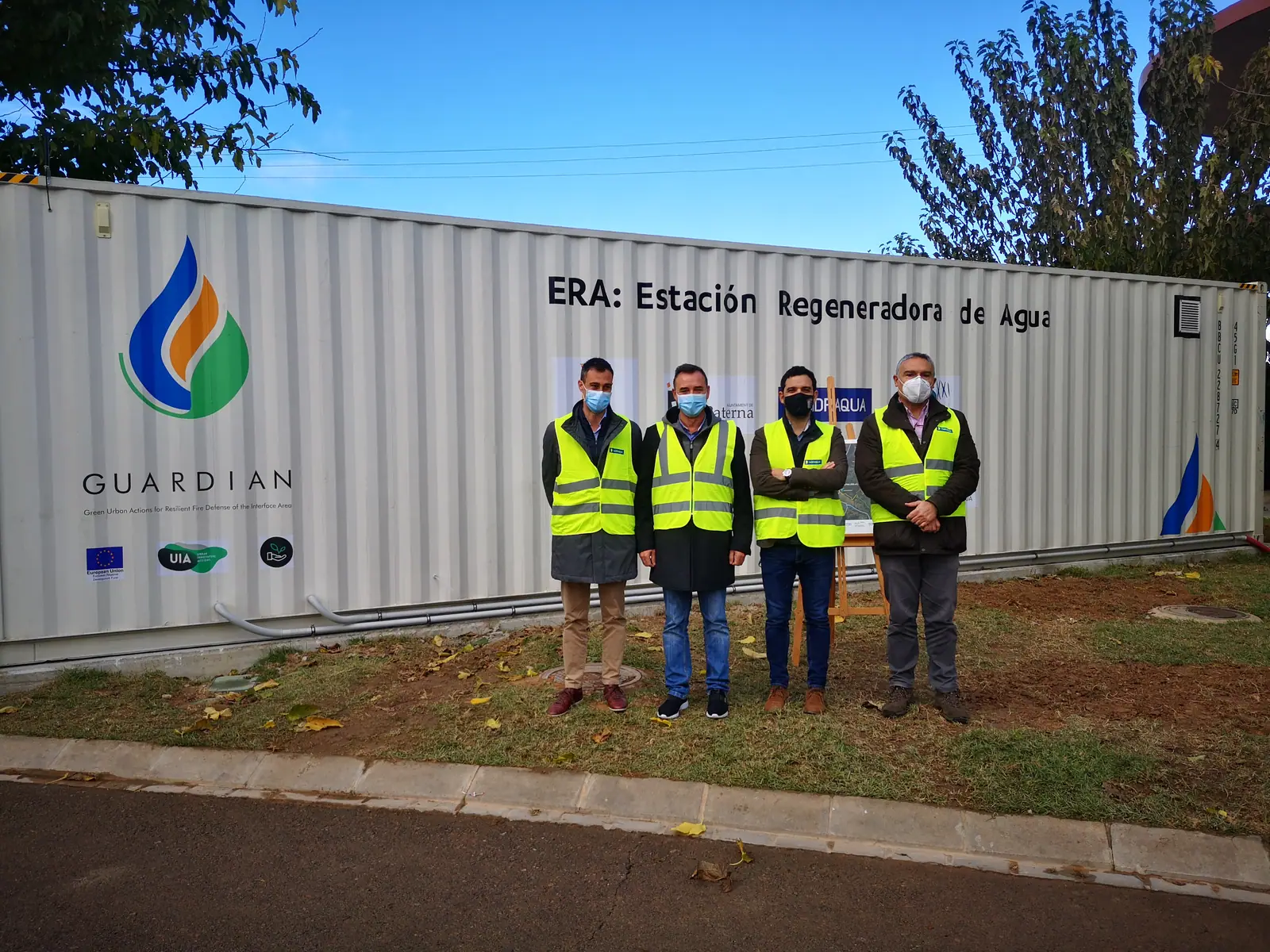
Inauguration of the Water Regeneration Station
Regarding the installation of the water towers for irrigation, this work is carried out by Medi XXI, a company specialising in environmental services, as are the silvicultural treatment works that the project also includes. These are tasks of clearing, pruning trees, or thinning diseased, dominated trees or trees that provide excessive density, as well as the removal of reed beds. In total, more than 37 hectares of a strategic nature will be managed with the aim of preventing an urban fire from spreading to the Natural Park, and a fire in the Turia or its surroundings from affecting populated areas. In the second phase of the work, the GUARDIAN project teams will plant more than 2,000 native Mediterranean plants of lower flammability (ash, box, rowan, mastic, myrtle or laurustinus, among others) that will act, together with prescribed irrigation, as authentic green barriers. With this combination of actions, the aim is to prevent the impact of high-intensity fires. For the study prior to carrying out these works, Medi XXI has had the collaboration of the Polytechnic University of Valencia (UPV).
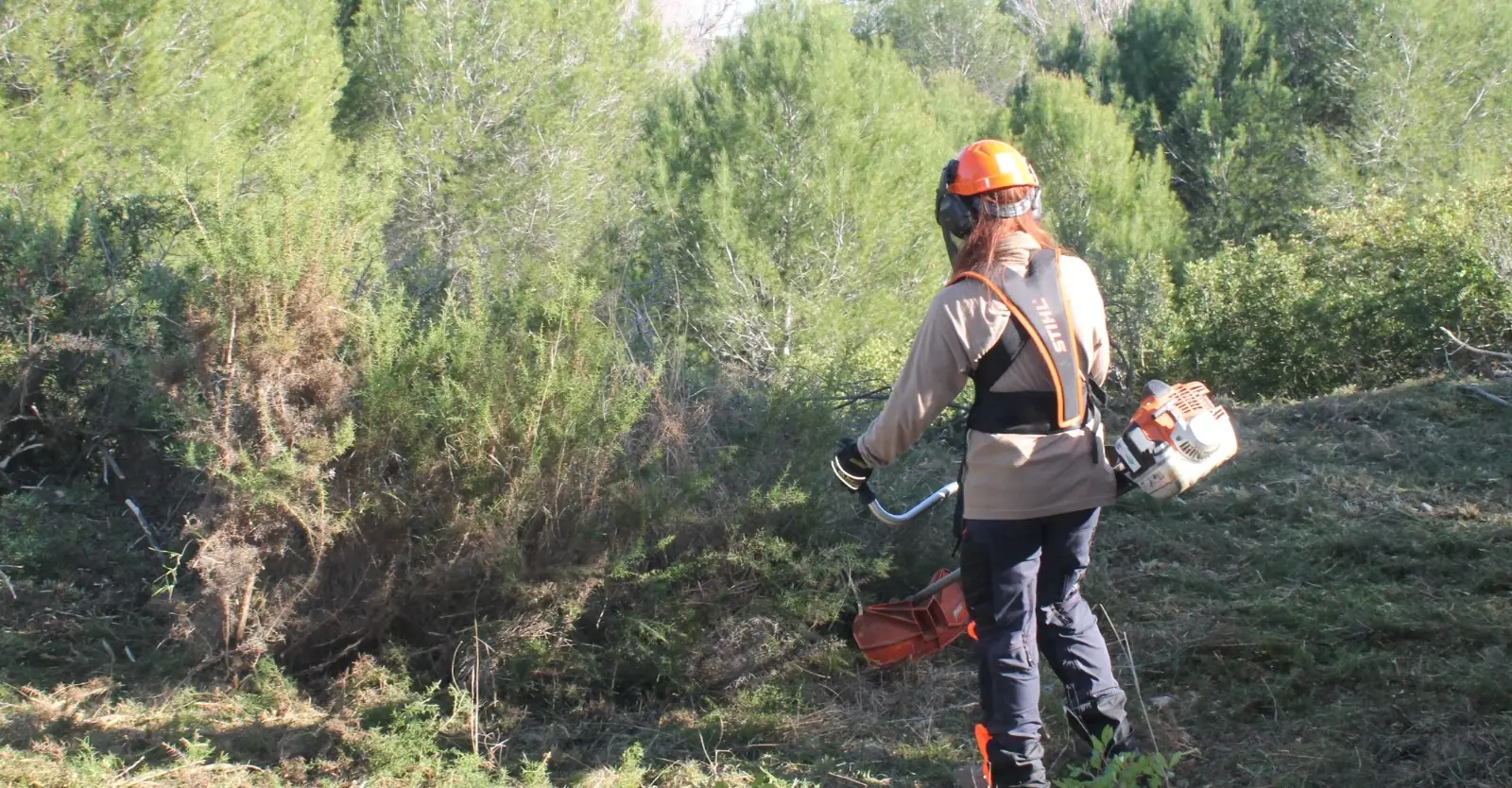
Forestry work carried out by the company Medi XXI
The contribution to the GUARDIAN project by the UPV also focuses on analysing how the characteristics of the soil and atmospheric conditions act on the water status of the vegetation. During the summer of 2020, the University installed soil, atmospheric and tree sensors in selected areas of La Vallesa to quantify water relations and study the effect of irrigation using the SIDEINFO towers. With these data, the hydrological knowledge of the forest will be deepened and optimal irrigation patterns to be applied by the permanently installed towers can be determined.
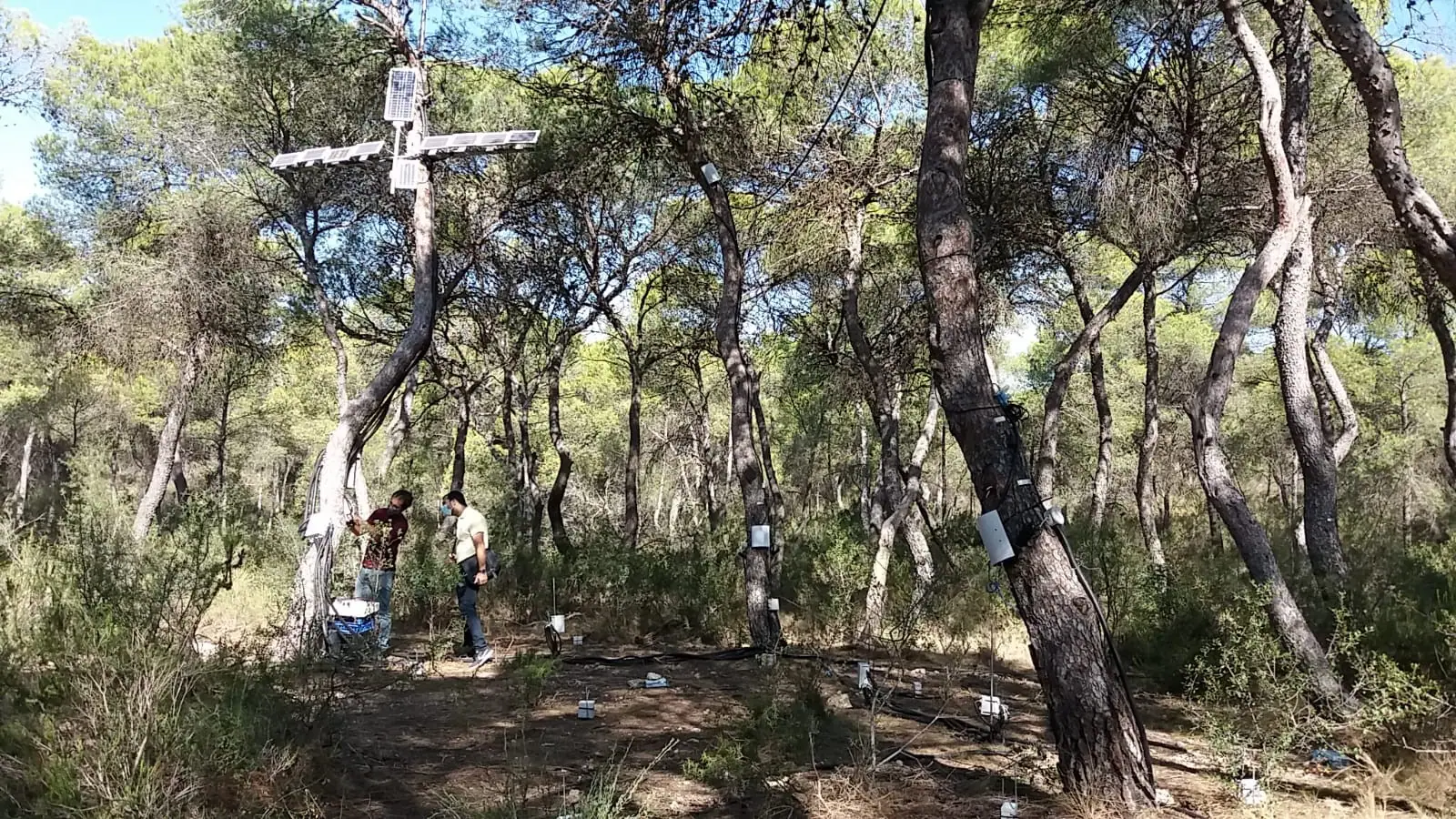
Installation of sensors by the UPV in the Parc Natural del Túria
Finally, the University of Valencia will be in charge of analysing the economic impact of the project.
Once this innovative design has been tested, it will be published so that it can be used by other European municipalities facing a similar problem.
A replicable solution
GUARDIAN shows that reclaimed water can protect the wildland-urban interface. Let us know if you would like to apply it in your municipality.