News · 27 May 2020
Interview with Mario Ruiz, Project Manager at CETAQUA
Mario Ruiz of Cetaqua explains the design of the GUARDIAN water regeneration plant and the many untapped uses of reclaimed water.
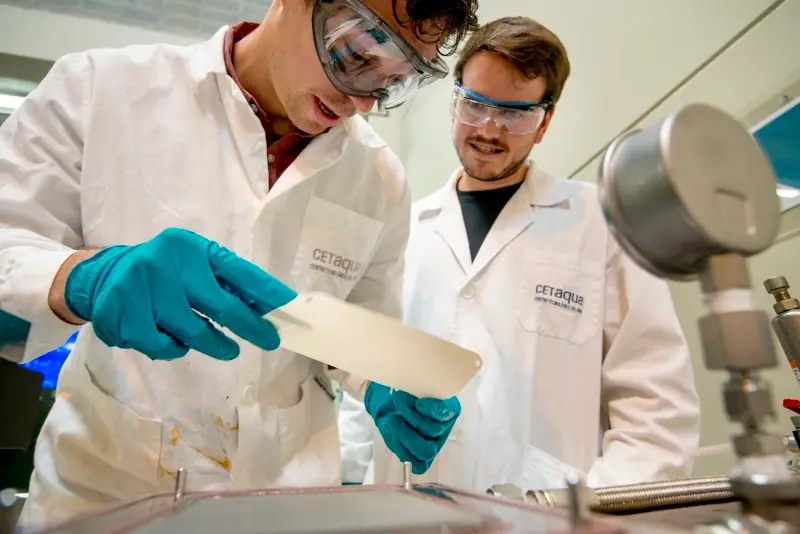
“With Guardian, we are seeing that there are many uses for reclaimed water”
The GUARDIAN project was created with the aim of improving preparedness and resilience against forest fires in the Parque Natural del Túria and La Vallesa through the use of reclaimed water. This initiative, which is funded by the European Union, is led by Riba-roja de Túria Town Council in collaboration with Paterna Town Council, Hidraqua, Medi XXI, the Universidad de Valencia, the Universidad Politécnica de Valencia and Cetaqua, Centro Tecnológico del Agua.
The towns of Riba-roja de Túria and Paterna and their residential estates lie within the Parque Natural del Túria, where there is a high risk of fire. The GUARDIAN project will design and build a water regeneration plant (ERA) to treat part of the effluent from the EDAR Camp de Túria II wastewater treatment plant (WWTP). Through the installation of water cannons, the reclaimed water will be used for preventive and maintenance irrigation of the areas that make up the green barriers protecting the area’s wildland-urban interface against fire. Reclaimed water will thus provide a tool to defend against this growing risk, while avoiding the use of drinking water.
What is Cetaqua’s role in the GUARDIAN project?
Cetaqua is responsible for designing the water regeneration plant (ERA) that will supply water to the fire protection systems and for the restoration of La Vallesa reservoir. Together with HIDRAQUA, which is in charge of building the plant and the reclaimed water network, we have worked on assessing the initial situation, defining the treatment requirements and sizing the units.
We will also control and monitor the operation of the regeneration plant in terms of the quality of the water produced and the associated cost.
What solution has Cetaqua proposed in the GUARDIAN project? What role do emerging contaminants play?
The proposed solution is aimed at guaranteeing the safety of the reclaimed water and minimising the presence of emerging contaminants. At Cetaqua, we have put forward a treatment train based on a robust and efficient solution: an ozonation system followed by biofiltration. This train is designed to remove organic micropollutants (pharmaceuticals, personal care products, pesticides), which are commonly present in urban wastewater and in areas with intensive agricultural activity.
Regarding the use of reclaimed water for firefighting, are there any precedents in this field of application? What are the main challenges?
The use of reclaimed water proposed in the GUARDIAN project is a novel one compared with the usual destinations of reclaimed water. Royal Decree 1620/2007 includes fire protection systems among urban uses, but in our case these are fire protection systems installed for forestry uses. The quality and safety of the reclaimed water will be guaranteed by a double disinfection barrier of ozone and chlorination.
What other experience has Cetaqua had in the field of water reuse?
In recent years Cetaqua has worked on various EU-funded projects related to wastewater reuse, mainly of urban origin (LIFE aWARE, LIFE WIRE), although we are also starting to work on water reuse in the industrial sector. Cetaqua currently leads the LIFE Remine-Water project, which aims to provide technologies for the mining and metallurgical industry to recover by-products and achieve zero liquid discharge. The H2020 B-Water Smart project will soon get under way, in which Cetaqua will set up Spain’s first water reuse Living Lab in Alicante.
Cetaqua is also taking part in the REGIREU project, co-financed by the European Union’s European Regional Development Fund through the RIS3CAT water community. Its aim is to develop innovative, globally competitive technologies to overcome the main technical barriers hindering the implementation of wastewater reuse in the urban, industrial and agricultural sectors.
Where does Cetaqua see the greatest potential for promoting reuse?
At present, the main destination of reclaimed water is agricultural irrigation. However, as we are seeing in the GUARDIAN project, there are still many potential uses of reclaimed water that could help free up conventional water resources for more demanding uses.
In the industrial sphere, we are seeing that both the internal reuse of industrial water and the industrial use of reclaimed water of urban origin are gaining ground. More and more companies are seeking to position themselves as leaders in sustainable development and to reduce their environmental impact. In this respect, water reuse is key to achieving this goal.
What role should reuse play in water management?
We are moving towards a circular economy model in which water reuse plays a key role.
We have overcome the technical barriers to producing reclaimed water. In the coming years, efforts must focus on tackling the social, economic and governance barriers in order to maximise the potential of reuse. Initiatives such as B-Water Smart and its Alicante reuse Living Lab will be useful tools for driving reuse projects and for managing reclaimed water alongside the other available water resources.
A replicable solution
GUARDIAN shows that reclaimed water can protect the wildland-urban interface. Let us know if you would like to apply it in your municipality.